
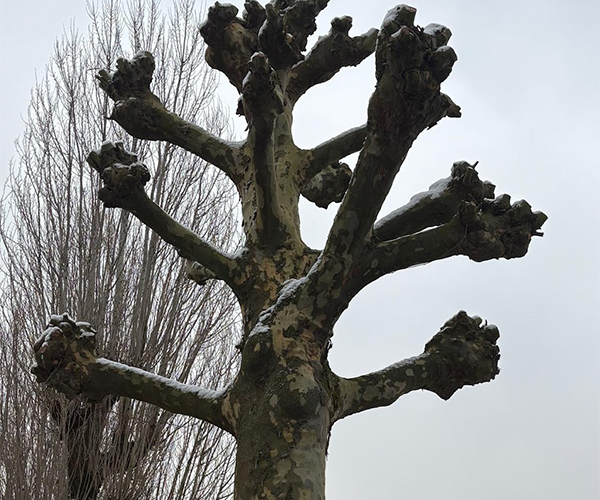
Tree pollarding is a specialised heavy pruning technique that limits tree height by cutting back upper branches, promoting a tidy, controlled canopy and manageable growth. As a result, it improves safety, appearance, and long-term manageability.
At Tree Service Colchester, we provide expert tree pollarding across Braintree, Brightlingsea, Clacton, Coggeshall, Colchester, Frinton-on-Sea, Harwich, Ipswich, Manningtree, Mersea, Rowhedge & Fingringhoe, Sudbury, Tiptree, Witham, Wivenhoe and surrounding areas.
Pollarding is an ancient tree management technique dating back to Roman times (1st century) and widely practiced since medieval times, primarily used to produce sustainable wood for fuel, fodder for livestock, and timber while keeping new growth above grazing height.
Tree pollarding is a traditional arboricultural method used to control tree size, maintain structure, and promote long-term health. By carefully removing smaller branches while keeping the main limbs intact, our skilled arborists create a tidy, controlled shape. This technique is especially effective in urban streets, gardens, and confined spaces, reducing risks to buildings, roads, and nearby infrastructure.
Pollarding is tailored to each tree’s species, age, and condition, ensuring the process supports healthy growth without harming the tree.
Professional tree pollarding provides several advantages for trees and property:
- Enhanced Appearance: Creates a neat, visually appealing shape for gardens, streets, and public spaces.
- Health Maintenance: Encourages strong new growth, prevents overgrowth, and lowers disease risk.
- Risk Reduction: Reduces the chance of falling branches, protecting people and property.
- Infrastructure Safety: Prevents trees from interfering with streetlights, power lines, and nearby structures.
- Improved Light and Airflow: Opens the canopy to allow sunlight to reach gardens, lawns, and surrounding vegetation.
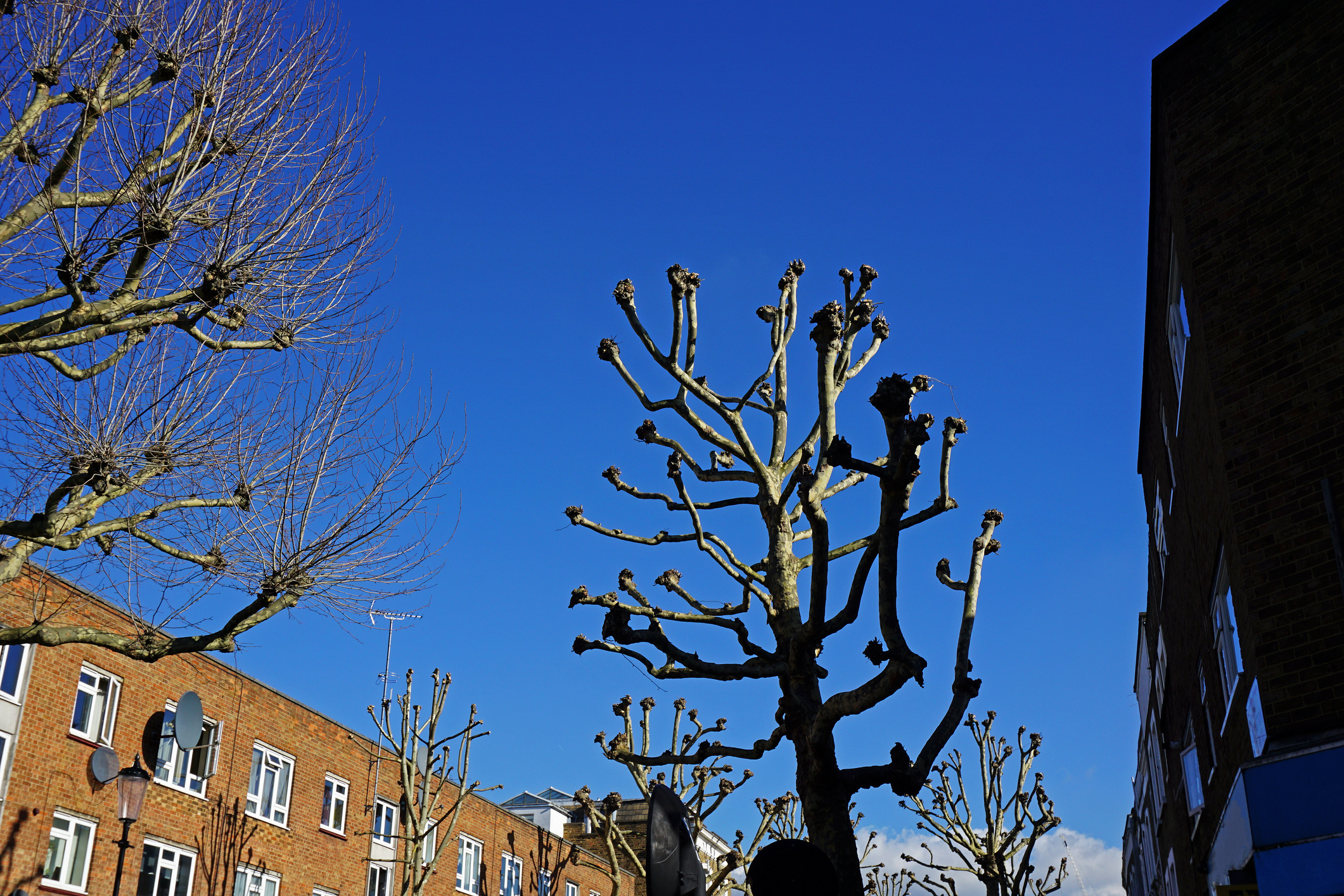
The best time to pollard trees is late winter to early spring, while the tree is dormant. However, some projects may require work at other times depending on the species and site conditions.
Pollarding is most effective on resilient species such as ash, oak, London plane, common lime, willow, poplar, and eucalyptus, which respond well to regrowth after pruning.
A tree should be pollarded once it reaches the desired height. Regular pollarding—every one to three years—helps maintain the tree’s size, encourages healthy growth, and preserves its overall shape.
Routine maintenance is key. By pruning yearly or at least every two to three years, pollarded trees remain balanced, healthy, and safe, reducing the risk of structural issues or falling branches.
Topping or lopping trees is outdated and considered harmful in modern UK tree care. These methods can cause decay, structural weakness, and safety hazards. Professional pollarding, in contrast, follows BS 3998 standards, maintaining the tree’s health, encouraging safe growth, and preserving its natural shape.
Hiring a professional tree pollarding service ensures:
Our fully qualified and experienced team provides residential, commercial, and public sector solutions, making sure every tree receives tailored care.
Pollarding involves cutting back branches to the main trunk or framework to:
- Control tree size and shape
- Prevent interference with buildings, roads, or utility lines
- Promote healthy growth
This method is particularly common in urban areas like Ipswich city centre, and historic landscapes.
Pollarding is usually recommended for:
- Mature trees needing size management
- Trees in high-traffic areas, parks, or confined gardens
- Trees with weak or damaged branches
Timing depends on species, but most are pollarded in late winter or early spring.
Yes, if the tree is:
- Protected by a Tree Preservation Order (TPO)
- Located in a conservation area
For other trees, permission is usually not required, but it is always best to check with your local council, for example in Mersea, Sudbury and Tiptree.
When done by trained, insured arborists, pollarding:
- Extends the tree’s life
- Reduces risk of falling branches
Improves overall structure and health
Incorrect pollarding can seriously damage or even kill a tree, so always use professional tree surgeons.
Costs vary depending on:
- Tree size and species
- Location and accessibility
Complexity of branches and equipment needed
Pollarding is generally less expensive than full tree removal but may require ongoing maintenance. Always request a detailed quote from a certified tree surgeon.
For expert tree pollarding in Braintree, Brightlingsea, Clacton, Coggeshall, Colchester, Frinton-on-Sea, Harwich, Ipswich, Manningtree, Mersea, Rowhedge & Fingringhoe, Sudbury, Tiptree, Witham, Wivenhoe and across the wider North Essex & South Suffolk counties, contact our professional arborists today. We provide site assessments, tailored advice, and no-obligation quotes for safe, controlled, and effective tree pollarding.